



RM503 – Understanding Rebate Calculation Methods in D365 SCM: Stepped, Cumulative, Rolling, and Total Value
Introduction
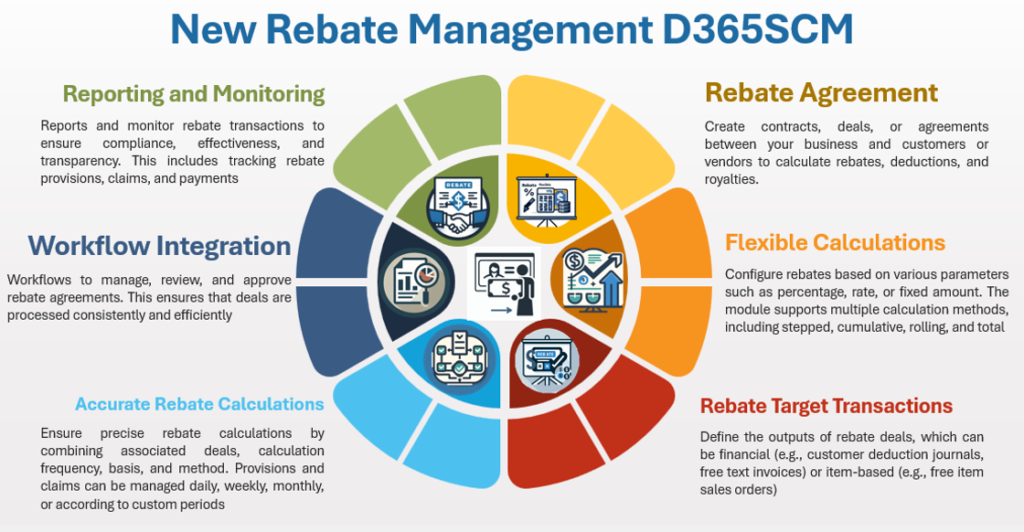
Rebate Management in Dynamics 365 Supply Chain Management offers multiple calculation methods to determine how rebates are applied to customer purchases. These methods—Stepped, Cumulative, Rolling, and Total Value—help businesses tailor rebates based on their sales strategies.
Here’s an explanation of each method, its purpose, and a simple real-world example to clarify how they work.
Calculation Methods
| Calculation Method | What It Is | Purpose | Example |
| Stepped Calculation Method | Different rebate percentages or amounts apply to specific tiers of sales volume or value. Each tier is calculated separately. | Encourages customers to buy larger volumes by offering increasing rebates for higher tiers. | A customer buys 1,200 brake pads with the following rebate structure: ➡️ 0–500 units: No rebate. ➡️501–1,000 units: £2 per unit. ➡️ 1,001+ units: £3 per unit. Calculation: ➡️500 units × £0 = £0. ➡️500 units × £2 = £1,000. ➡️200 units × £3 = £600. Total rebate: £1,600. |
| Cumulative Calculation Method | The rebate is calculated on the total quantity or value purchased. The percentage increases as thresholds are crossed. | Rewards customers progressively based on total purchases rather than individual transactions. | A customer buys 1,200 filters at £10 each (£12,000 total) under the following rebate structure: ➡️ 0–500 units: No rebate. ➡️501–1,000 units: 5% of total sales. ➡️1,001+ units: 10% of total sales. Total rebate: 10% of £12,000 = £1,200 (applies to full amount). |
| Rolling Calculation Method | Rebates are based on a continuous time period (e.g., monthly, quarterly), ensuring consistent purchases. | Encourages customers to buy regularly instead of making large one-time purchases. | A distributor offers £1 per unit for 300+ units per rolling quarter. A customer purchases: ➡️January: 100 units. ➡️ February: 150 units. ➡️ March: 80 units. Total = 330 units → Rebate: £330. The system evaluates rolling periods (Feb-Mar-April next). |
| Total Value Calculation Method | Rebates are based on the total value of purchases over an agreement period, without tiers or timeframes. | Simplifies rebate agreements by using a fixed percentage or amount based on overall sales. | A distributor offers a 2% rebate for customers buying at least £50,000 over 6 months. A customer buys: ➡️Month 1: £10,000. ➡️Month 2: £15,000. ➡️Month 3: £30,000. Total = £55,000. Rebate: £55,000 × 2% = £1,100. |
Choosing the Right Method
- Use Stepped for encouraging incremental growth by offering tiered rewards.
- Use Cumulative for rewarding overall sales and applying simpler rebate conditions.
- Use Rolling to drive consistent purchases over time and avoid lulls in buying behavior.
- Use Total Value to simplify agreements for long-term contracts or high-value customers.
Conclusion
Understanding the different rebate calculation methods in Dynamics 365 SCM helps businesses tailor their rebate programs to meet specific sales goals. For a car part distributor, each method offers unique advantages—whether encouraging bulk orders with Stepped rebates or ensuring consistency with Rolling rebates. By selecting the right calculation method, you can create effective incentives, strengthen customer relationships, and achieve your sales targets efficiently.
Expand Your Knowledge: See More Rebate Management Blogs
Share this content:












Post Comment