





Correlation vs Causation: Why AI Sees Patterns, Not Causes
Correlation vs causation is one of the most useful ideas in data and AI. Correlation means two things move together; causation means one thing actually makes the other happen. Mixing them up is how good data leads to bad decisions.
What is the difference between correlation and causation?
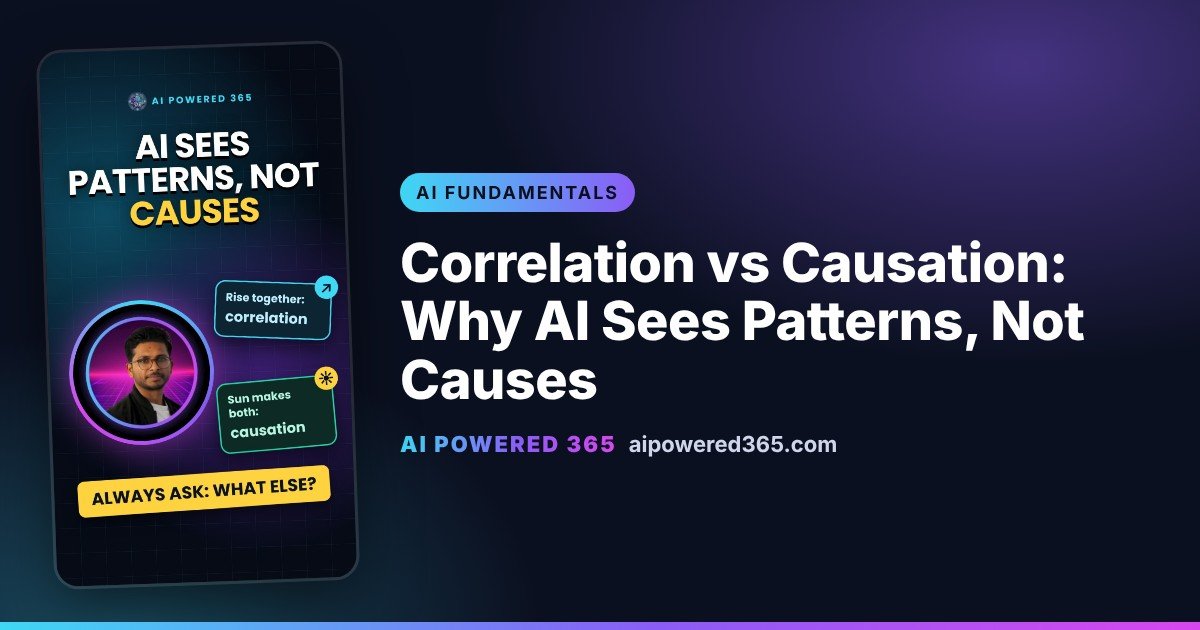
Picture a seaside town over one year. Ice cream sales climb in spring, peak in summer and fall in autumn. Sunburns do exactly the same. Put both on a chart and the two lines look almost identical. That is correlation: they move together.
But ice cream does not cause sunburn. Sunny days cause both: more people buy ice cream and more people get burnt. That hidden third thing is the real cause. Causation means one thing makes the other happen.
A simple way to remember it
The rooster crows, then the sun rises. Every single morning. The rooster still did not make the sun rise. Something happening first, or at the same time, is not proof that it caused anything.
Why does correlation vs causation matter with AI?
AI learns by spotting patterns in huge amounts of examples. That makes it brilliant at finding things that go together, but a pattern is not a reason. Ask an AI tool “Our sales go up when we email on Mondays. Is Monday the reason?” and a good answer is “maybe not”: payday, the season or a sale could explain it too.
How to avoid the correlation vs causation trap
Before you trust any pattern, in a chart, a news headline or an AI answer, ask one question:
“What else could explain this?”
Ask yourself, or type it straight into ChatGPT, Claude, Copilot or Gemini. Then, if you can, test it fairly: email half your list on Monday and half on Thursday, and compare the results.
Together does not mean because.
Related guides
- What Is an AI Agent? Chatbot vs Agent, Explained Simply
- Why AI Makes Things Up (AI Hallucinations) and the 10-Second Fix
- Why AI Agrees With Everything (AI Sycophancy) and the Fix
- Why ChatGPT Gives a Different Answer Every Time (and How to Use It)
- Watch this explainer as a YouTube Short
- The full AI Fundamentals playlist
One practical AI idea a day from AI Powered 365.
Share this content:











Post Comment