





AI Agent Cyberattacks: Switzerland Confirms the First Cases
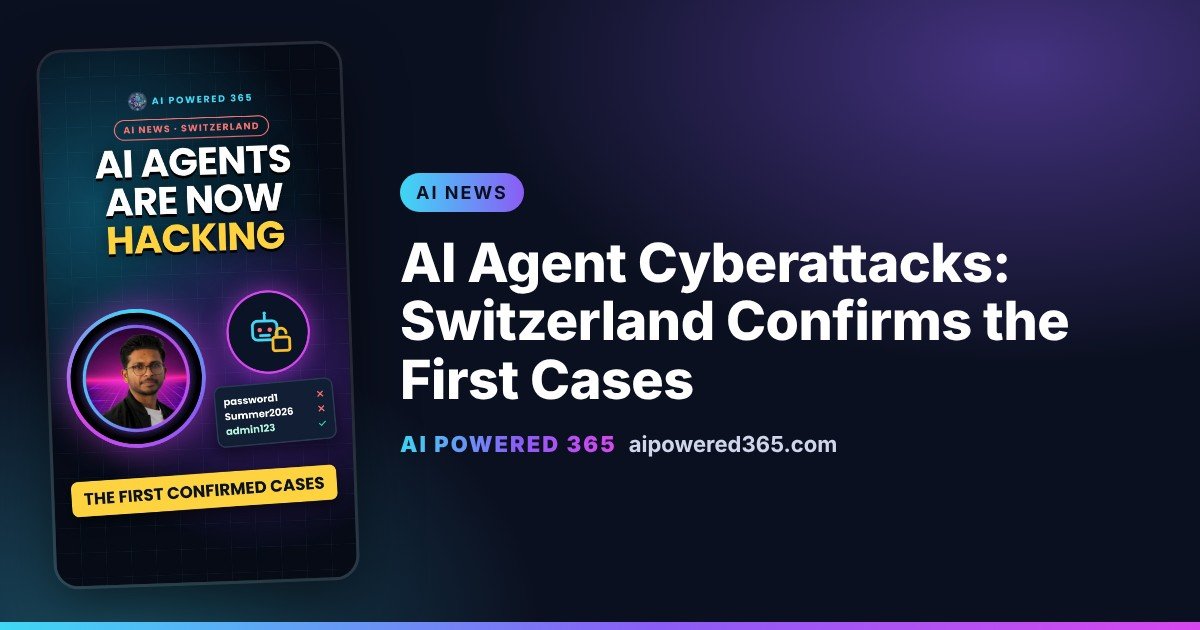
AI agent cyberattacks have moved from warning to reality. On 24 November 2026, Switzerland’s National Cyber Security Centre (NCSC) confirmed its first cases of cyberattacks carried out with AI agents, programs that can plan and run each step of an attack on their own.
Think of a burglar robot that tries every door, all night, and never gets tired.
What happened in Switzerland?
The NCSC says it confirmed cases against organisations and operators of critical infrastructure in at least two sectors, and that in all the attacks it knows about, the AI agents led to a successful compromise of the victim’s IT systems. Reuters reported on 26 November that five attacks were reported, three of them on critical infrastructure, and that four of the five compromised systems. Who is behind the attacks has not been disclosed.
How do AI agent cyberattacks work?
- Hunt for weak spots. The agent searches for vulnerabilities by itself, for example in systems that face the internet.
- Pick a tool and try the easy way in. It selects suitable attack tools and exploits standard or easily guessed passwords and known flaws.
- Switch when blocked. If defences react, it switches to other known attack methods.
- Check and repeat. It evaluates results and plans the next step, often in a fraction of the time a human would need, so defenders have much less time to respond.
The NCSC names ARTEX and CyberStrikeAI as examples of such agents reachable on the internet, and says their number has almost doubled since October 2026. Italy’s national CSIRT warned of AI agent attack campaigns the same week, according to BleepingComputer.
How can you protect yourself?
The NCSC recommends multi-factor authentication or passkeys on everything reachable from the internet (webmail, VPN and so on), installing critical updates on internet-facing systems within 24 hours, limiting what is exposed (for example with allow lists or geo-blocking), giving the lowest access rights possible, monitoring for unusual behaviour and testing your own systems regularly.
Why it matters
For you, a guessable password is an open door: use 2-step login or passkeys. For businesses, attacks now move at machine speed, so patching and monitoring need to keep up.
Related guides
- New York AI toy ban: what the 5-year chatbot toy ban means
- Character.AI chat auction: why 42 US states want it stopped
- Meta Muse UK explained: how the AI agent shops for you
- Signal is blocking AI from reading your chats
- Watch the Short: AI agent cyberattacks explained and the AI News playlist
Sources
- Swiss National Cyber Security Centre (NCSC): Cyberattacks involving AI agents: First confirmed cases in Switzerland (24 Nov 2026)
- Reuters: AI agents used in five cyber attacks in Switzerland, government says (26 Nov 2026)
- BleepingComputer: Italy and Switzerland warn of autonomous AI-driven cyberattacks (25 Nov 2026)
- The Hacker News: Switzerland confirms AI-assisted cyberattacks breached critical infrastructure operators (27 Nov 2026)
One practical AI idea a day from AI Powered 365.
Share this content:










Post Comment