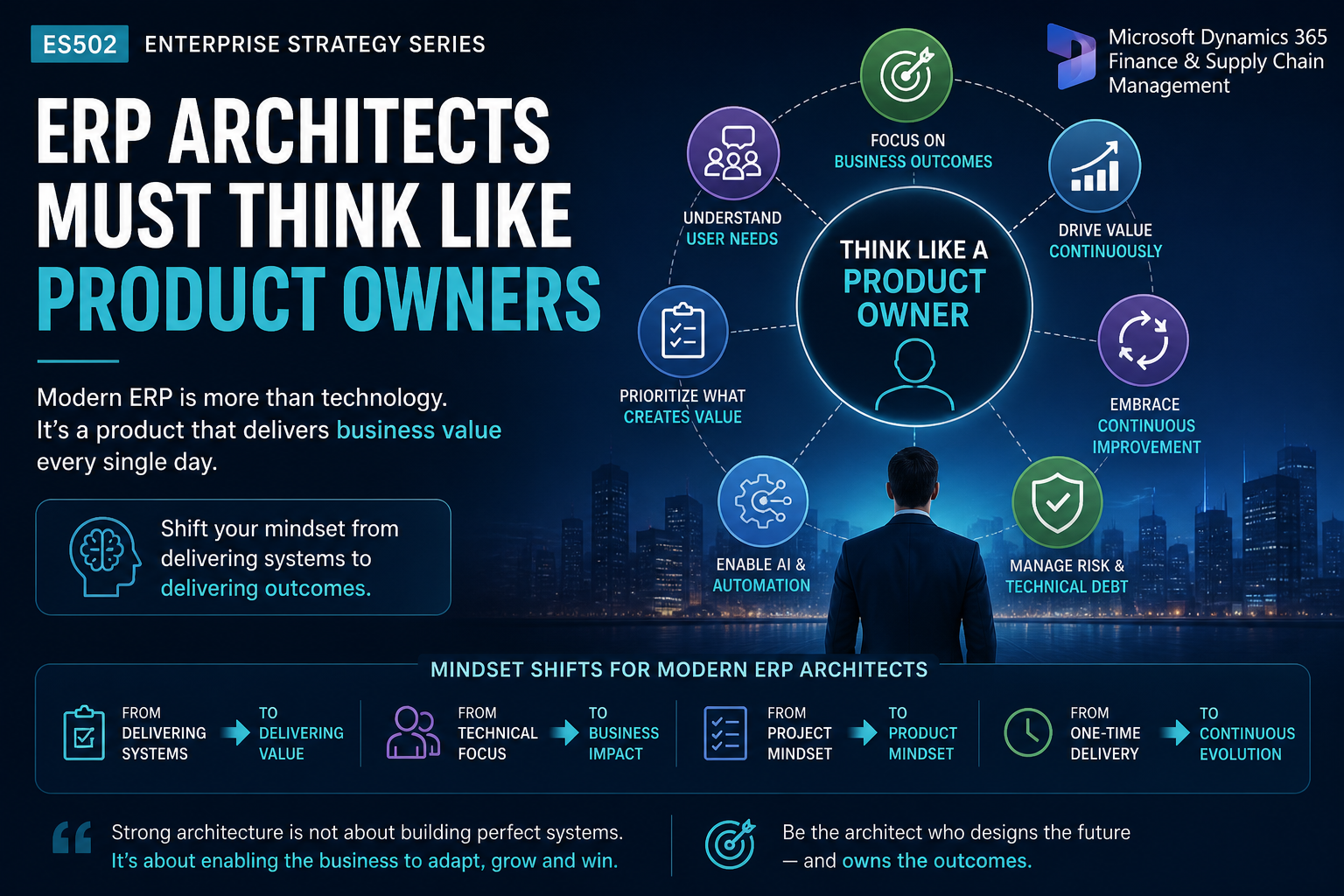
ES502 – ERP Architects Must Think Like Product Owners
Traditional ERP architecture is changing rapidly.
The role is no longer just about:
🔹 Integrations
🔹 Data models
🔹 Security
🔹 Environments
🔹 Technical governance
🔹 Solution diagrams
Those things still matter.
But modern ERP programmes now demand something much bigger.
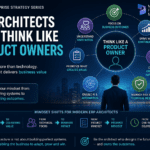
⚠️ ERP Architects must start thinking like Product Owners.
Why?
Because ERP platforms are no longer static systems.
Platforms like Microsoft Dynamics 365 Finance & Supply Chain Management have become connected enterprise ecosystems powering:
🤖 AI capabilities
⚡ Automation
📊 Analytics & reporting
🔗 External integrations & APIs
🏢 Business operations
📦 Supply chain execution
💰 Financial processes
🧠 Operational decision,making
And that changes the responsibility of architecture completely.
1️⃣ Modern ERP Architects must focus on business outcomes — not just system delivery
The real value of architecture is not:
❌ “Was the integration successful?”
The real value is:
✅ “Did the business become more effective?”
That requires thinking beyond delivery.
It requires ownership thinking.
2️⃣ Product Owners ask different questions
Strong Product Owners constantly ask:
📌 What business problem are we solving?
📌 What creates the highest value?
📌 What operational pain exists today?
📌 What should be prioritised next?
📌 What feedback are users giving?
📌 How will this scale in 3 years?
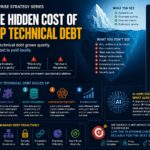
📌 What technical debt are we creating?
Modern ERP Architects should be asking exactly the same questions.
3️⃣ The best ERP Architects operate at the intersection of business and technology
Great ERP architecture is no longer only technical.
The strongest ERP leaders understand:
🔹 Business strategy
🔹 Operational reality
🔹 Enterprise governance
🔹 User experience
🔹 AI enablement
🔹 Data architecture
🔹 Scalability & growth
Not just technology.
4️⃣ AI will amplify weak ERP architecture
AI will not magically fix poor ERP foundations.
In fact, AI amplifies existing problems.
If organisations already struggle with:
⚠️ Poor master data
⚠️ Weak governance
⚠️ Fragmented integrations
⚠️ Inconsistent processes
⚠️ Unreliable reporting
…then AI simply produces faster confusion.
This is why strong ERP architecture is becoming one of the most important foundations for successful enterprise AI adoption.
5️⃣ ERP is never “finished”
One of the biggest mindset shifts organisations must make is understanding this:
🚫 ERP is not a one,time implementation.
Modern ERP platforms continuously evolve because businesses continuously evolve.
There will always be:
📌 Regulatory changes
📌 Localisation requirements
📌 New business models
📌 Acquisitions & expansion
📌 Security challenges
📌 Automation opportunities
📌 AI & Copilot innovation
📌 Reporting maturity improvements
This requires continuous product,style thinking.
Not project,style thinking.
🚀 The strongest ERP leaders today are the ones who can:
✅ Align technology with business priorities
✅ Balance short,term delivery vs long,term scalability
✅ Simplify complexity
✅ Communicate with executives and technical teams
✅ Drive operational adoption
✅ Challenge inefficient processes
✅ Think strategically beyond go,live
That is no longer optional.
That is modern ERP architecture.
#ERP #Dynamics365 #EnterpriseArchitecture #ERPStrategy #ProductOwnership #DigitalTransformation #AI #Microsoft #TechnologyLeadership #BusinessTransformation
Share this content:






Post Comment